

🎶 Start your 14-day free trial & unlock the full course today. Start Free Trial →
tonebase 
Music
 Course

Reading Rhythms

Taught by renowned 

soprano


Heidi Vass

In this introductory session, flutist Chelsea Tanner lays the groundwork for rhythmic fluency by exploring the core concepts that shape our understanding of rhythm. You’ll dive into the definitions and distinctions between beat, pulse, tempo, and meter—gaining clarity on how these elements interact in music. Designed to build a solid conceptual framework, this lesson sets the stage for deeper exploration and practical application in future sessions.

  • checkmark icon
    Difficulty: 
    Beginner Intermmediate
  • checkmark icon
    Duration: 
    1
     hours
     hour

Course Syllabus

Concepts: Overview

In this introductory session, flutist Chelsea Tanner lays the groundwork for rhythmic fluency by exploring the core concepts that shape our understanding of rhythm. You’ll dive into the definitions and distinctions between beat, pulse, tempo, and meter—gaining clarity on how these elements interact in music. Designed to build a solid conceptual framework, this lesson sets the stage for deeper exploration and practical application in future sessions.

Concepts: Dots and Ties

Chelsea Tanner offers a clear explanation of how dots and ties function in rhythmic notation, illuminating the ways they extend note values and influence the flow of time within a measure. This lesson deepens your understanding of duration and prepares you to interpret rhythmic structures with greater confidence.

Concepts: Triplets

In this lesson, Chelsea Tanner explains tuplets—rhythmic groupings that divide the beat into non-standard parts—including triplets, quintuplets, and beyond. You’ll learn how these groupings function within different meters, how to approach them mentally and physically, and why they’re essential for rhythmic versatility. By building clarity around these irregular subdivisions, you’ll expand your rhythmic toolkit and feel more confident navigating complex passages.

Concepts: Figuring out Rhythms

In this lesson, Chelsea Tanner walks you through a step-by-step process for decoding unfamiliar rhythms with clarity and confidence. You’ll learn how to break rhythms down into manageable parts, identify underlying pulses and subdivisions, and apply strategies that make even the most complex passages approachable. This methodical approach empowers you to read and internalize rhythms more effectively in any musical context.

Concepts: Syncopation

In this lesson, Chelsea Tanner explains the concept of syncopation—when emphasis is placed on normally weak or off beats. You’ll learn how syncopation disrupts the expected rhythmic flow and how to recognize and internalize it for more expressive and rhythmically engaging performance.

Concepts: Compound Meter

In this lesson, Chelsea Tanner introduces compound meter, where beats are divided into groups of three rather than two. You’ll learn how to identify compound time signatures, feel the underlying pulse, and understand how note groupings and subdivisions function within this rhythmic framework.

Practical Application: 4/4 Time

In this hands-on session, Heidi Vass guides you through rhythm reading in 4/4 time using a Kodály-based approach that emphasizes vocalizing rhythm with syllables. You’ll learn how to internalize the pulse, subdivide beats, and practice rhythms out loud—building muscle memory and confidence. This practical method helps bridge the gap between rhythmic concepts and musical performance, making rhythm feel both accessible and embodied.

Practical Application: 3/4 Time

In this lesson, Heidi Vass leads you through rhythmic exercises in 3/4 time using pitch substitution. You’ll strengthen your ability to feel a triple meter, maintain a steady pulse, and navigate rhythmic patterns that emphasize the natural flow of 3/4 time. This practice helps reinforce timing, accuracy, and musical phrasing within a compound of three beats per measure.

Practical Application: 2/4 Time

In this lesson, Heidi Vass focuses on building rhythmic accuracy in 2/4 time using pitch substitution. You'll practice feeling a quick, steady pulse and articulating short rhythmic patterns clearly and confidently. This session is designed to sharpen your timing and coordination in duple meter—perfect for march-like or energetic musical contexts.

Practical Application: Common vs. Cut Time

In this session, Heidi Vass helps you distinguish between common time (4/4) and cut time (2/2), using a Kodály-based system to vocalize and internalize the rhythmic differences. You'll practice adjusting your feel for the beat, shifting from a subdivided pulse to a broader, more fluid sense of time. This lesson develops your ability to recognize and perform rhythms accurately in both meters, strengthening your rhythmic versatility and musical interpretation.

Click here to download the course workbook PDF and see the full syllabus →
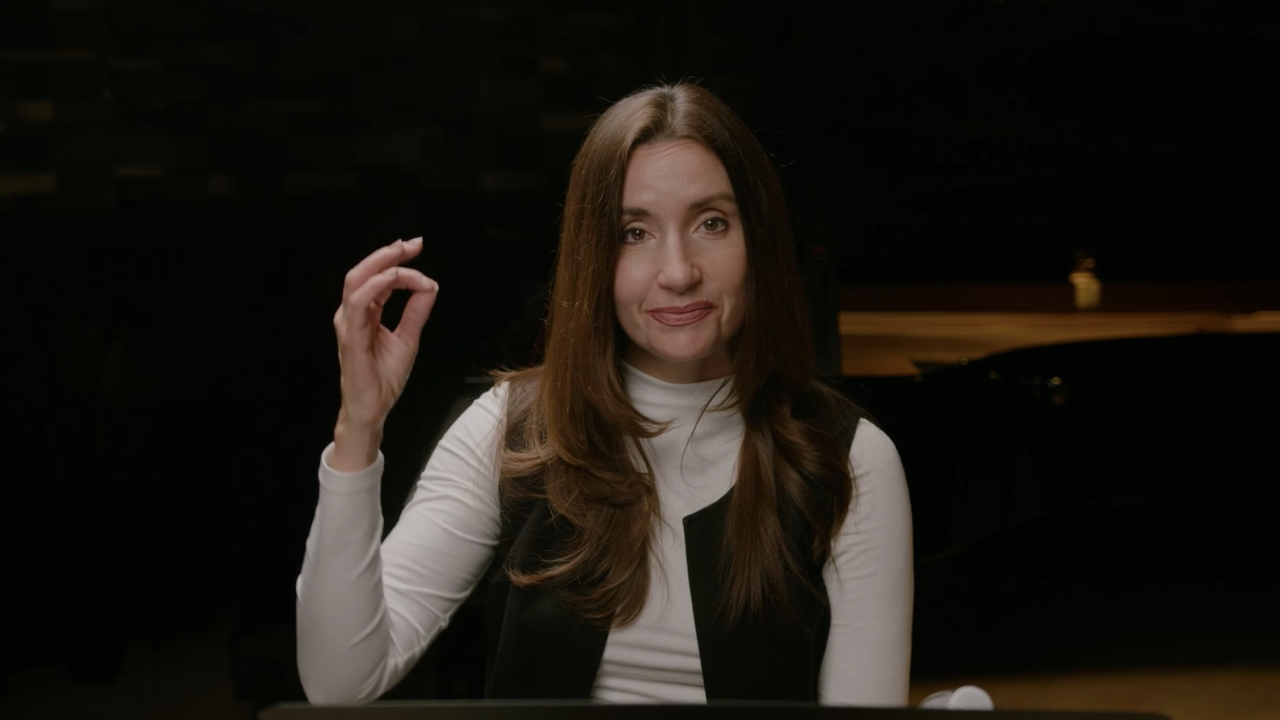
Heidi Vass
meet YOUR INSTRUCTOR

Heidi Vass

Award winning soprano, Heidi Vass, is a passionate vocal music educator and singer, bringing over two decades of experience on stage and in the teaching studio to the tonebase voice platform.

Read full bio →
Heidi Vass

Instant access to 100s of courses.

Explore our collection of in-depth courses taught by GRAMMY winners, Juilliard professors, and world-renowned performers.

"I don't regret for a minute having spent the money on the membership. There's something for every musician on tonebase – I recommend you give it a try."

Photo of Dave
Dave McLellan

Concert & Chamber Musician

Join 25,000+ active members on the the world’s largest classical music platform.