🎶 Start your 14-day free trial & unlock the full course today. Start Free Trial →
tonebase Piano Course

Beethoven

Sonata in D Minor, Op. 31 No. 2 "Tempest"

Taught by renowned instructor

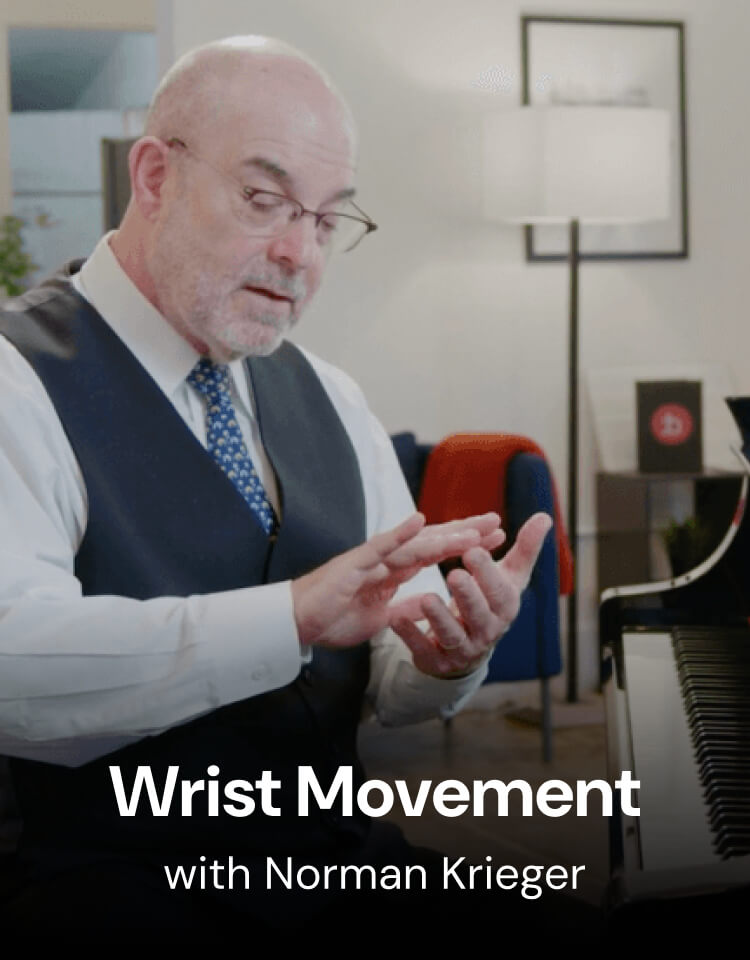
Norman Krieger

Beethoven's so-called "Tempest" Sonata, Op. 31 No. 2, is one of his most iconic and unusual works for piano. While all of Beethoven's mature sonatas are mini-universes in themselves, defying any conventional molds, the "Tempest" is an exception among exceptional works. The only piano sonata Beethoven composed in D minor, the piece emerges through harmonically ambiguous mists, and begins unfolding not unlike a work of Shakespearean drama – although the piece's nickname is only loosely attributed to the composer. Join Norman Krieger, Chair of the Piano Department at Indiana University's Jacobs School of Music, as he navigates through Beethoven's storm, revealing overlooked details in the score and coaching your physical movements, all in the service of capturing the character and drama of this terrifying and tragic piece.

  • checkmark icon
    Difficulty: 
    Intermediate-Advanced
  • checkmark icon
    Duration: 
    2
     hours
     hour
All courses on tonebase include subtitles in English and Spanish

Course Syllabus

Introduction

Join Norman Krieger, Chair of the Piano Department at the Jacobs School of Music at Indiana University, as he prepares you for a journey through the stormy waters of Beethoven's iconic "Tempest" Sonata in D minor, Op. 31 No.2 – that "angel surrounded by demons."

I. Largo – Allegro

The first movement of Beethoven's "Tempest" Sonata begins like no other work: a pair of enigmatic rising arpeggio figures interrupted by scampering two-note slurs that reach terrifying heights before spiraling back down to earth. This "overture," as Norman Krieger calls it, is an exercise in unifying different tempi through pulse to create drama. In this spirit, Krieger approaches the whole movement passage by passage, sharing his secrets of touch, dynamics, and orchestral effects to generate color, character, and edge-of-your-seat suspense. He then circles back to analyze more carefully how he realizes his conception of the work physically, by breaking down the technical tools required to execute it.

II. Adagio

The proverbial "angel between two demons," the second movement of Beethoven's "Tempest" is the epitome of calm. As Norman Krieger shows, the subtle – almost pointillistic – orchestral effects are crucial to creating this tranquil atmosphere, while cultivating a singing tone allows you to generate a feeling of human warmth at the heart of the piece.

III. Allegretto

The third movement of Beethoven's "Tempest" is a galloping perpetuum mobile that emerges out of a fog before revealing its terrifying force. Norman Krieger invites you to join him on horseback as he navigates the uneven terrain of the piece, showing you how to capture a sense of struggle, suspense, and surprise through focused acts of touch, rotation, voicing, dynamics, and pedal.

Click here to download the course workbook PDF and see the full syllabus →
Access this course and hundreds more.

Click below to access hundreds of exclusive piano courses, available only on tonebase.

Unlock Course →
Norman Krieger
meet YOUR INSTRUCTOR

Norman Krieger

One of the most acclaimed pianists of his generation, Norman Krieger has toured worldwide and performs regularly with the major North American orchestras. He chairs the piano department at Indiana University's storied Jacobs School of Music and previously taught at University of Southern California for almost twenty years.

read full bio →
Norman Krieger

Learn from legendary pianists

Explore 1,000+ in-depth lessons taught by GRAMMY winners, Juilliard professors, and world-renowned performers, covering everything from timeless repertoire to advanced technique and artistry.

Listen to a few tonebase stories. Ready to start yours?