Try this Track free
guided Practice Tracks

Mozart's Rondo alla Turca, from first fingering to full performance

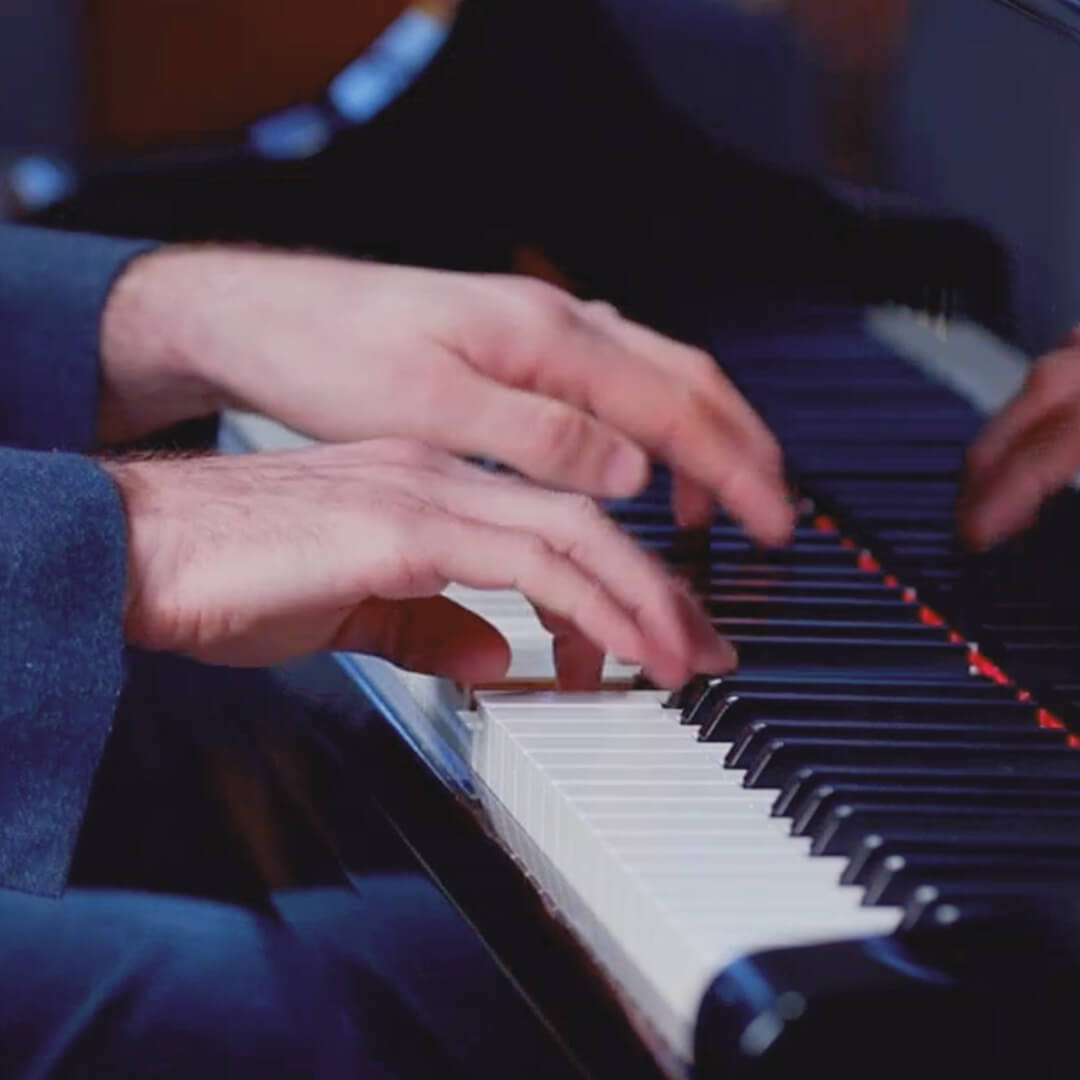
Mozart's most famous finale, broken into a guided path by pianist Dominic Cheli. Every section comes with practice demonstrations and detailed fingerings, so you build the piece with confidence from the opening grace notes to the final chords.

Try this Track free
No signup required

play-button-icon
W.A. Mozart: Rondo Alla Turca
Track trailer

Who this Track is for

For Pianists tired of practicing in circles

This Track isn't for everyone — and that's the point. It's a focused path for one piece, one player.

You can already play — but you practice in circles, never finishing a piece

You want one real piece, learned properly, from first note to last

You're done piecing together random videos and guessing what's next

What you'll learn · the path

Your guided path through the Rondo alla Turca

Each stop is one section of the piece. Open it at your instrument and everything you need is already there.

01

Welcome & General Information

What this piece is, where its sound comes from, and the three principles that govern it.

02

Warmup and Exercises

The scales, arpeggios and two custom exercises built out of the piece itself.

03

The Opening: Fingering, Tempo and Grace Notes

The fingering, the Allegretto tempo, and how the grace notes actually work.

04

The Opening: Articulation and Voicing

The two-beat lean, the staccato around it, and melody separated from accompaniment.

05

The Full A Section (Bars 1–24)

The complete refrain: voicing, contour, color, thirds, and the ornament at bar 23.

06

The B Section (Bars 24–32)

Octaves that have to be voiced, and left-hand rolls that are the drums of the band.

07

The C Section, Part 1 (Bars 32–40)

The hardest music in the piece, and almost entirely a fingering problem.

08

The C Section, Part 2 (Bars 40–56)

More fingering, a Chopin-flavored 4-3-4, and a lookalike passage that isn't.

09

The B Section Returns (Bars 56–64)

10

The A Section Returns (Bars 64–88)

A dynamic map that makes the return its own statement, driving into bar 88.

11

The B Section's Virtuoso Return (Bars 88–96)

Broken octaves, built from two-note slurs into a rotation from the forearm.

12

The Coda (Bars 96–127)

Transparent chords, punchy grace notes, classic Mozart at 109, and how to end.

13

Full Piece Consolidation

The whole movement in one run, and then a full performance.

Start at the top — free

Who's guiding you

You're in expert hands, start to finish

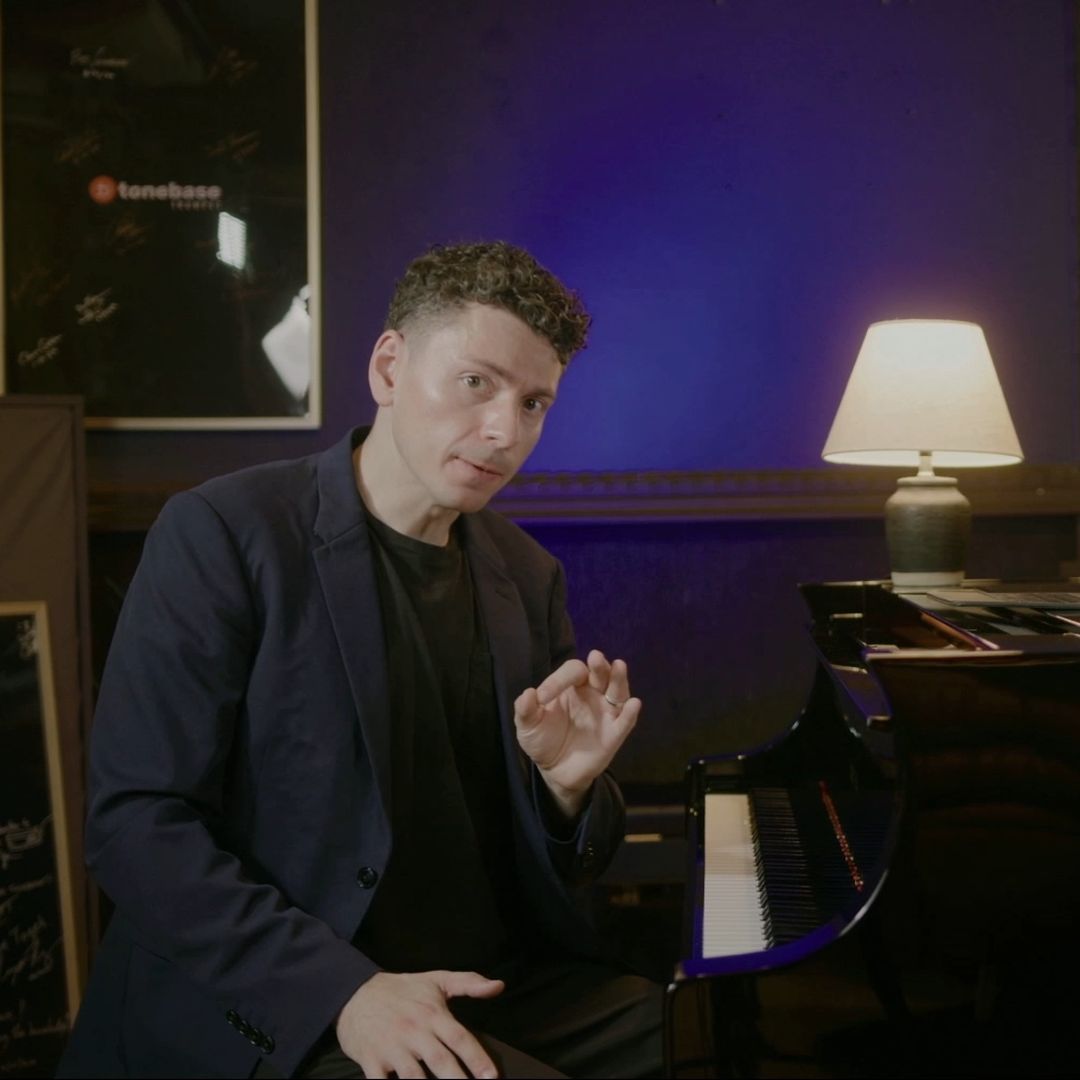
Dominic Cheli

tonebase's Piano Lead, an accomplished concert pianist and deeply experienced educator who has taught thousands of pianists. He built this Track and teaches every step of it himself.

How Tracks work

Everything for one section, in one place

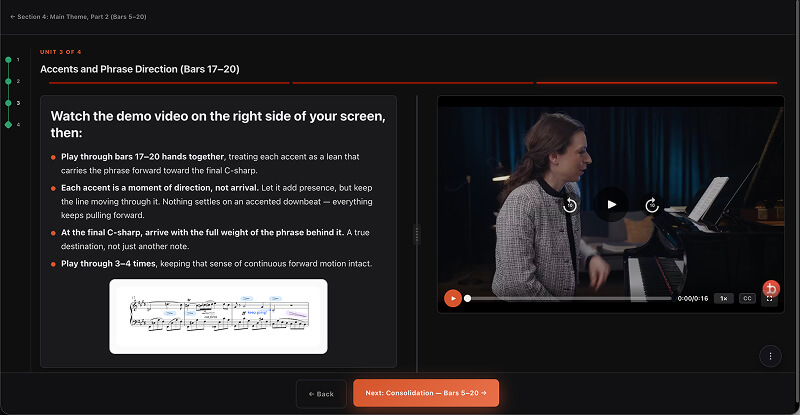
Made to use while you play, not watch on the couch. This is the anatomy of a single Track section.

play-button-icon
Annotated score

The passage marked up for exactly what matters — technical, musical, and interpretational — and synced to the demo.

Metronome & loop

Set your practice tempo and loop just the bars that need the work.

Reminders

Clear, specific steps for how to isolate the passage, how to build it, and what to listen for. A structure, not a suggestion.

Step checklist

Always know the next thing to do — no guessing.

BROWSE OTHER TRACKS

find your next piece

J.S. Bach: Prelude & Fugue C minor BWV 847

taught by 

Dominic Cheli

 & 

Evan Shinners

Explore this Track →

Debussy: Clair de Lune

taught by 

Jean-Efflam Bavouzet

 & 

Dominic Cheli

Explore this Track →

Beethoven: Moonlight Sonata (Mvt. I)

taught by 

Seymour Bernstein & John O'Conor

 & 

Dominic Cheli

Explore this Track →

Chopin: Nocturne in C# Minor

taught by 

Yulianna Avdeeva

 & 

Dominic Cheli

Explore this Track →

Start learning Rondo alla Turca now

Try the full Track free – no email, no payment, no commitment.